
Some of our links are affiliated, we will earn a commission when you buy a service or product. This will have no extra cost for you. For further info please refer to our Privacy Policy
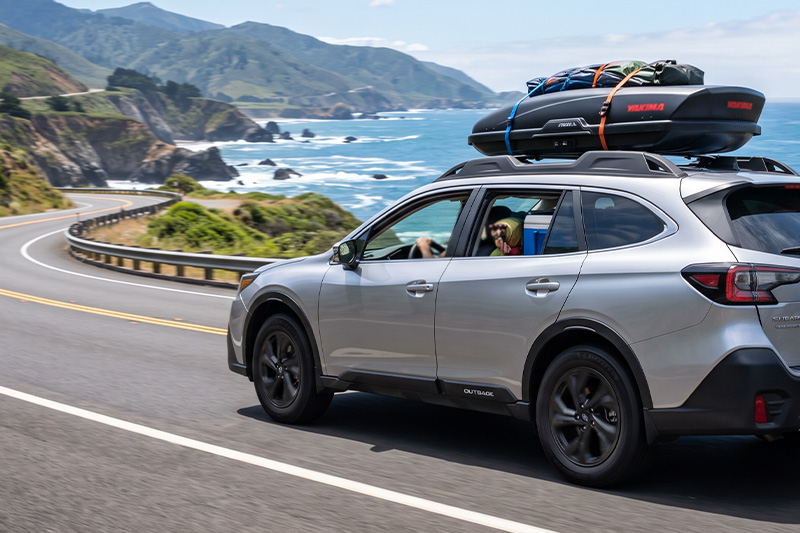
Summer road trips have a charm of their own. While the main destination is the goal, there’s plenty to enjoy on your way there. Sunny open roads, immersion in scenic routes, picnic breaks, and exploring unplanned locations are a few ways to enrich your experience.
However, once you hit the road, hot summer weather will put both your vehicle and tires to the test. The distance you need to cover, extra luggage you’ve brought, and crowded highways put extra strain on your gear, each in their own way.
Fortunately, summer tires excel on long journeys under hot sun and sudden showers. But just mounting these tires isn’t a solution; you still have to make sure they are in good condition. Preparation is what distinguishes a successful trip from a failed one.
Starting the Trip Without Checking Your Summer Tires
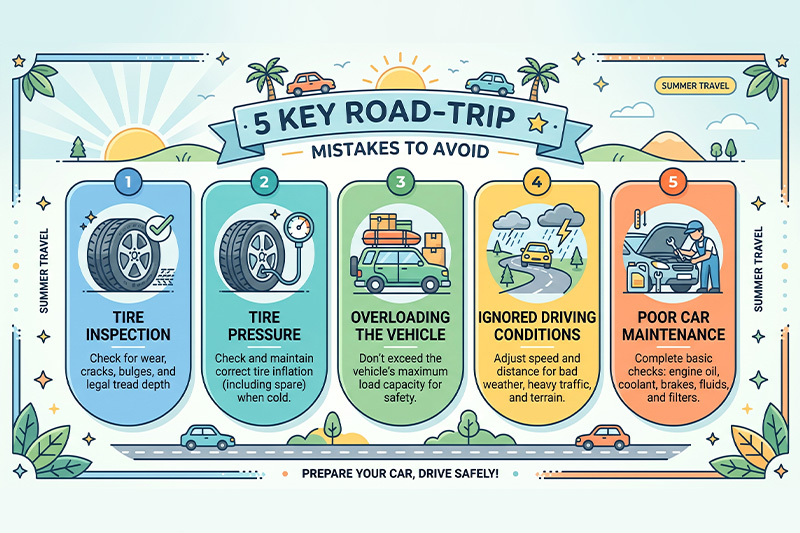
As summer tires bear the brunt of the journey, checking all four, including the spare, gives you peace of mind during the trip. While you may not need the spare for this adventure, it’s better to have it functional when you need it than to wait for help while stranded.
A quick tread inspection is all it takes to see potential issues your tires might have. Cuts, cracks, bulges, punctures, and uneven wear compromise tire performance in different ways, warranting immediate tire replacement.
While tires might look fine and new on the outside, internal degradation can begin long before any visible signs appear. Keeping an eye out for their condition and age prevents potential hurdles down the road.
Getting Tire Pressure Wrong
Maintaining optimal tire pressure can be challenging in summer heat, as it can cause pressure fluctuations. Departing from the vehicle manufacturer’s recommended values leads to weaker road grip, harder control of the vehicle, increased braking distance, higher fuel consumption, and uneven wear that shortens tire lifespan.
Driving with such tires to resorts, beaches, or national parks is dangerous and costly. Check the pressure when tires are cold to ensure accurate values. As heat and pressure compound over time on long-distance drives, longer journeys benefit the most from proper tire pressure. This ensures safe driving, particularly when you include extra pressure from heavily loaded vehicles.
Overloading the Car for the Journey
Packing all necessities makes you prepared for the journey. However, you can go overboard by bringing everything with you. It’s easy to give in to the prospect of enjoying different activities and just bring one more thing. But that’s exactly what can sabotage your trip.
Cars and tires can withstand a certain weight limit, including passengers and their luggage. If you’re an adventurous soul, water lover, or probably both, it’s hard to resist not bringing camping, sports equipment, and beach gear. However, it’s exactly that extra luggage on top of everything that pushes your vehicle and tires to the brink till they fail.
Following the manufacturer’s recommendation for the vehicle’s load limits helps you avoid such issues without compromising your enjoyment during the trip.
Assuming Summer Tires Make You Invincible
Summer tires let you get the most out of your gear and journey in warm conditions, but you still need to pay attention to the potential risks. Good tires are necessary for safety, performance, and comfort, but greater responsibility still lies with the driver.
Heavy showers can quickly replace sunny weather, making all the difference on the road. The design of summer tires helps prevent hydroplaning, but it requires slowing down to safely proceed with your journey.
Summer tires excel at high speed handling and aggressive cornering, but they’re only as effective as the driver behind the wheel. Winding roads can be tricky to navigate regardless of the tire quality, and road hazards are easier to miss at higher speeds.
Pay attention to heavy eyelids and drifting lanes while driving, as this doesn’t happen by chance. High temperatures, dehydration, and monotonous stretches of roads are the recipe for driver fatigue. Take regular breaks and refresh yourself before continuing your journey.
Forgetting the Rest of the Car
Overlooking to check the vehicle ahead of the trip and bring necessities becomes a problem at the worst time possible, when you’re already many miles away from help.
Forgetting to top off coolant or any other crucial liquid, like engine oil and windshield washer fluid, isn’t an issue till the vehicle stops or you can’t see the road properly. Checking their levels lets the vehicle function as expected, leaving you to enjoy the travel and safely reach your destination.
Once you hit the road, you can’t predict what conditions you’ll have to drive in. Heavy traffic, winding roads, and reduced visibility in rain and at night are all hurdles that can be avoided by checking brakes, battery, lights, windshield wipers, and other elements. Keeping the vehicle in order is what prevents unnecessary stress on trips.
Emergencies during the trip can happen, so it’s best to be prepared for them. Having a spare tire or a tire repair kit allows you to quickly proceed with your journey instead of waiting for assistance. In case you have to wait for it, emergency supplies come in handy till the issue is resolved and you’re ready to go.
Final Thoughts: Prepare Your Summer Tires, Then Enjoy the Journey
Creating a memorable journey isn’t hard to pull off. All it takes is good preparation before you start your adventure. Taking a vehicle to a mechanic and packing all necessities lets you avoid many problems down the road. Don’t forget a quick summer tire inspection. It can help you avoid headaches and stress.
Once everything is ready, what remains is to enjoy a smooth journey, different activities, and create new memories. The best way to enjoy the trip is to prevent problems before they even get a chance to sabotage your adventure.